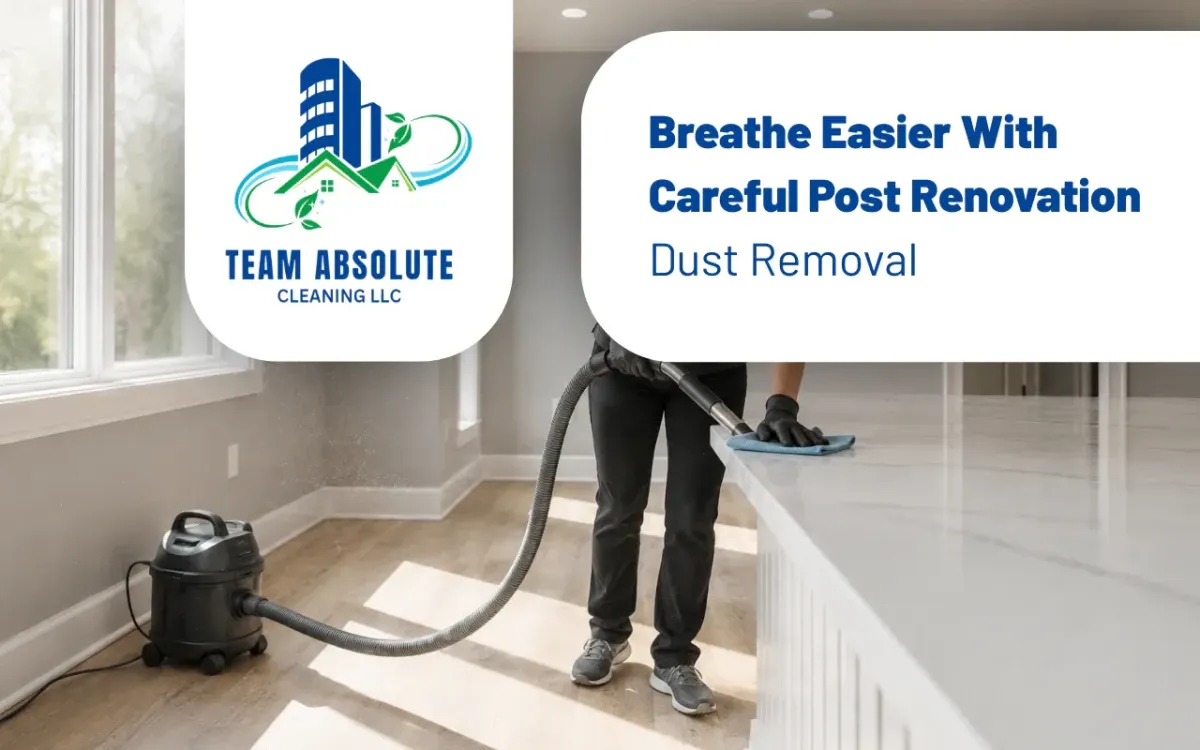
Breathe Easier With Careful Post Renovation Dust Removal
After a remodel, your home can feel fresh, bright, and new. However, the dust left behind can quickly hide that clean feeling. With careful post renovation dust removal, you can protect your space, your air, and the work you just finished.
At Team Absolute Cleaning LLC, we know that fine dust can settle in places most people do not expect. Therefore, we use simple steps, steady care, and the right tools to help your home feel cleaner after renovation work.
Renovation Dust Needs Fast And Careful Attention
Fine dust after remodeling can land on walls, floors, vents, and soft furniture. It may also move through the air each time someone walks through the room. As a result, your home may look clean while tiny dust still remains.
Proper post renovation dust removal also helps protect new paint, floors, counters, and fixtures. When dust stays too long, it can dull surfaces and make cleaning harder later. Therefore, early cleanup helps your remodel look its best.
First Steps Before Cleaning Your Newly Updated Space
Before cleaning begins, remove small items, cover furniture, and protect nearby rooms. This keeps dust from spreading while you work. Also, close doors when possible and place plastic over vents during the first cleanup stage.
Move decorations, electronics, and fabrics out of the room.
Cover clean floors and nearby furniture with sheets.
Keep dirty cloths and tools in one set area.
Simple Tools That Make Dust Removal Much Easier
The right tools help catch dust instead of pushing it around. A vacuum with a HEPA filter is helpful because it traps very small particles. In addition, microfiber cloths hold dust better than regular rags.
For safer construction dust cleaning, use soft brushes, clean mop heads, and damp cloths. These tools are gentle on new surfaces. They also help you clean corners, baseboards, ledges, and other tight areas with less effort.
Best Ways To Clean Hard Surfaces After Remodeling
Start high and move downward. First, clean shelves, window frames, walls, and counters. Then, finish with floors. This order keeps dust from falling onto areas you already cleaned.
Vacuum loose dust before using any damp cloth.
Wipe surfaces with clean microfiber towels.
Rinse cloths often so dust does not spread again.
When needed, use mild soap and warm water on tile or sealed surfaces. However, avoid harsh products on new finishes. At Team Absolute Cleaning LLC, we treat fresh surfaces with care so they stay clean and safe.
Gentle Cleaning Methods For Fabrics And Soft Areas
Carpets, curtains, cushions, and chairs can hold dust deep inside the fabric. Therefore, vacuum these areas slowly and use the right attachment. A second pass can help pull up dust that was missed the first time.
If covers can be washed, follow the care label and let them dry fully. For items that cannot be washed, use a fabric-safe cleaner. These renovation cleanup tips can help soft surfaces feel fresh again without damage.
Cleaner Air Starts With Ventilation And Filtration
Open windows when the weather allows it. Fresh air helps move dust out and brings cleaner air in. Also, place fans toward open windows so dusty air leaves the room faster.
Run an air purifier with a HEPA filter.
Change HVAC filters after major remodeling work.
Keep vents clean before turning systems back on.
Good airflow supports post renovation dust removal because dust can stay in the air after surfaces are cleaned. With Team Absolute Cleaning LLC, our team understands how air movement affects the final result.
Frequently Asked Questions
How long does renovation dust stay in a home?
Renovation dust can stay for days or weeks if it is not cleaned well. It may settle again after each cleaning. Therefore, steady follow-up cleaning helps remove hidden dust over time.
Can regular vacuuming remove all construction dust?
Regular vacuuming may remove visible dust, but it may not catch smaller particles. A HEPA vacuum is better for construction dust cleaning because it traps finer dust more safely.
Should I clean walls after a renovation?
Yes, walls often collect dust after sanding, cutting, or painting. Use a dry microfiber cloth first. Then, if the surface allows it, wipe gently with a lightly damp cloth.
Is fine dust after remodeling bad for breathing?
Fine dust after remodeling can bother the nose, throat, eyes, and lungs. It may also affect people with allergies or asthma. Cleaner surfaces and better air flow can help reduce this problem.
When should I hire a cleaning team?
Hire a cleaning team when dust is heavy, rooms are large, or vents and tight spaces need attention.
Keep Your Renovated Home Fresh For Longer
Once the main cleanup is finished, small habits can keep dust from building up again. Use doormats, clean entry areas often, and vacuum high-traffic rooms. Also, wipe counters, shelves, and window sills each week.
At Team Absolute Cleaning LLC, we believe a clean remodel should feel healthy, calm, and ready to enjoy. Regular care supports post renovation dust removal and helps your updated home stay bright for longer.